



No Tax Amnesty in 2027, Government Focuses on Improving the Tax System

Asset Forfeiture Bill Also Targets Tax Crimes
September 9, 2026
PMK 55/2026: Requirements to Become a Tax Consultant Are Getting Stricter
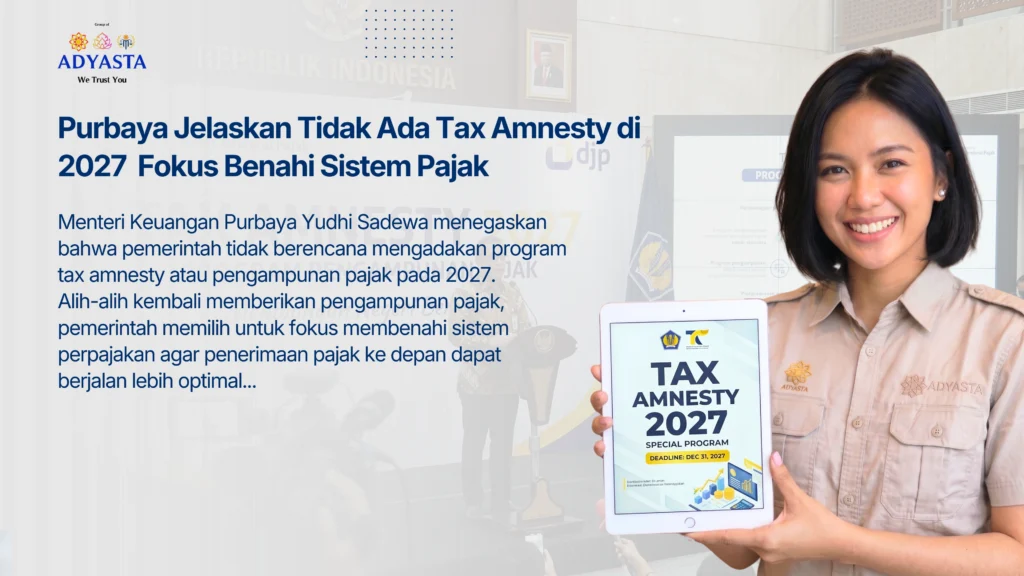
September 15, 2026Minister of Finance Purbaya Yudhi Sadewa has confirmed that the government does not plan to introduce a tax amnesty program in 2027.
Instead of providing another tax amnesty, the government will focus on improving the taxation system to optimize tax revenue in the future.
Government Prioritizes Tax System Improvements
Purbaya stated that as long as he serves as Minister of Finance, there are no plans to introduce another tax amnesty program.
One of the considerations is the potential risk faced by tax officials. Even after a tax amnesty program ends, participants’ tax data may still be subject to examination. If certain data is unclear or difficult to verify, tax officials conducting the examination could potentially face legal issues.
For this reason, the government considers improving the tax collection system to be a better approach than reopening a tax amnesty program.
The planned improvements include:
- Improving the performance of tax officials
- Strengthening the tax administration system
- Enhancing tax supervision
- Increasing taxpayer compliance
What Is Tax Amnesty?
Tax amnesty is a program that provides the elimination of taxes that would otherwise be payable, including the elimination of administrative and criminal sanctions in the tax sector, subject to taxpayers disclosing their assets and paying a redemption fee.
In Indonesia, tax amnesty-related programs have been implemented twice:
1. Tax Amnesty – 2016
Indonesia implemented its first tax amnesty program in 2016.
2. Voluntary Disclosure Program (PPS) – 2022
The government introduced the Voluntary Disclosure Program in 2022, allowing taxpayers to voluntarily disclose previously undisclosed assets.
Government’s Focus for 2027
With no tax amnesty planned for 2027, the government will prioritize improving the tax system and increasing taxpayer compliance.
These measures are intended to create a more effective tax collection system and optimize state revenue without relying on another tax amnesty program.
Conclusion
There are currently no plans for a tax amnesty in 2027.
Instead, the government is focusing on strengthening the foundation of Indonesia’s tax system through better tax administration, stronger supervision, improved performance among tax officials, and increased taxpayer compliance. For taxpayers, this serves as a reminder that maintaining proper tax administration and fulfilling tax obligations will become increasingly important.
Related posts
October 16, 2026
October 14, 2026
October 13, 2026