



No Tax Rate Hike: Here’s How the Government Plans to Achieve Its Rp2.357 Trillion Tax Revenue Target

Government Targets an Additional Rp1.2 Trillion in Tax Revenue as DGT Reactivates 143,449 Dormant Taxpayers
July 22, 2026
Here’s the Process of Issuing an SP2DK for Unregistered Taxpayers
July 27, 2026
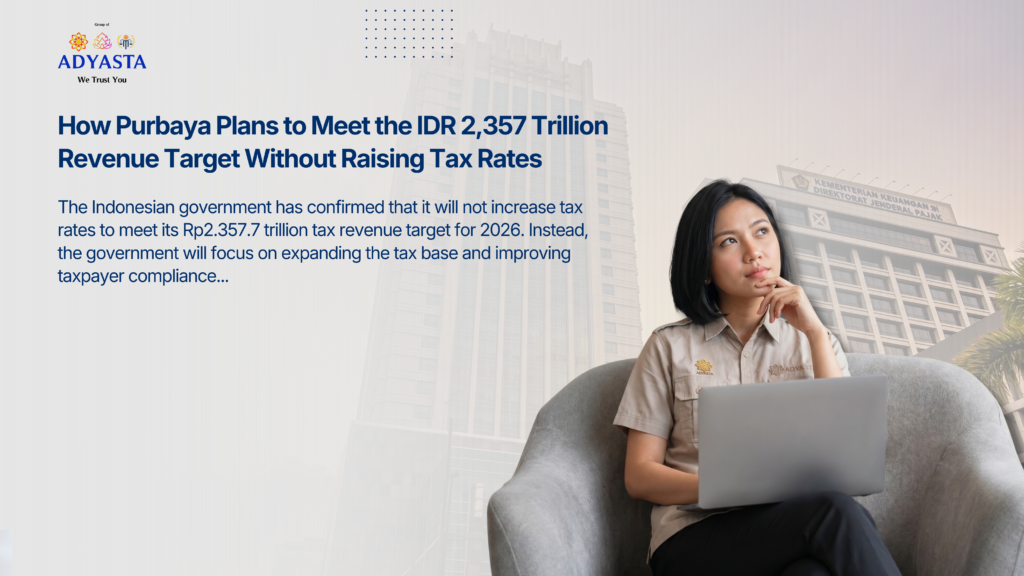
The Indonesian government has confirmed that it will not increase tax rates to meet its Rp2.357.7 trillion tax revenue target for 2026. Instead, the government will focus on expanding the tax base and improving taxpayer compliance.
Minister of Finance Purbaya Yudhi Sadewa emphasized that the government’s priority is not to impose additional tax burdens on the public, but to ensure that individuals and businesses with tax obligations fulfill them in accordance with existing regulations. One of the key strategies is to improve compliance among taxpayers who have not been properly reporting or paying their taxes.
Targeting Non-Compliant Taxpayers
According to Purbaya, the government will focus on taxpayers and economic activities that have not yet been fully incorporated into the tax system. One example is tax collection from online sellers whose transactions have not been adequately monitored for tax purposes.
He stressed that this approach does not introduce new taxes. Instead, it aims to ensure that everyone who is legally required to pay taxes complies with their obligations, creating a fairer and more balanced tax system.
Expanding the Tax Base Instead of Raising Tax Rates
Rather than increasing tax rates, the government is implementing a strategy known as tax extensification, which focuses on identifying taxpayers who should be paying taxes but have not yet fulfilled their obligations. By expanding the tax base and improving compliance, the government expects to increase state revenue without changing existing tax rates.
Higher tax revenues are expected to provide the government with greater fiscal capacity to finance public services and development programs that benefit society.
Priority Sectors
As part of its tax base expansion strategy, the government will pay closer attention to several sectors that still hold untapped tax potential, including:
- The digital economy
- The informal sector
- The shadow economy, which refers to economic activities that are not officially recorded within the tax system.
Compliant Taxpayers Should Not Be Concerned
The government also emphasized that these measures are not intended for taxpayers who have already complied with their tax obligations, including businesses and high-income individuals who consistently pay taxes in accordance with the law. The primary objective is to improve compliance among those who have not yet met their tax responsibilities.
Conclusion
To achieve its 2026 tax revenue target, the Indonesian government will maintain current tax rates while focusing on expanding the tax base and improving taxpayer compliance. By bringing more taxpayers and economic activities into the tax system—particularly within the digital economy, informal sector, and shadow economy—the government aims to strengthen state revenue without imposing additional tax burdens on compliant taxpayers.
Related posts
October 16, 2026
October 14, 2026
October 13, 2026