


MBDK Tax in the 2026 Draft State Budget: Maintaining Health, Increasing Revenue

Maintaining Local Tax Fairness Amidst Property Tax Controversy
September 8, 2025
Celebrating Unity and Fun: A Look Back at BBS Indonesia Raya 2025!
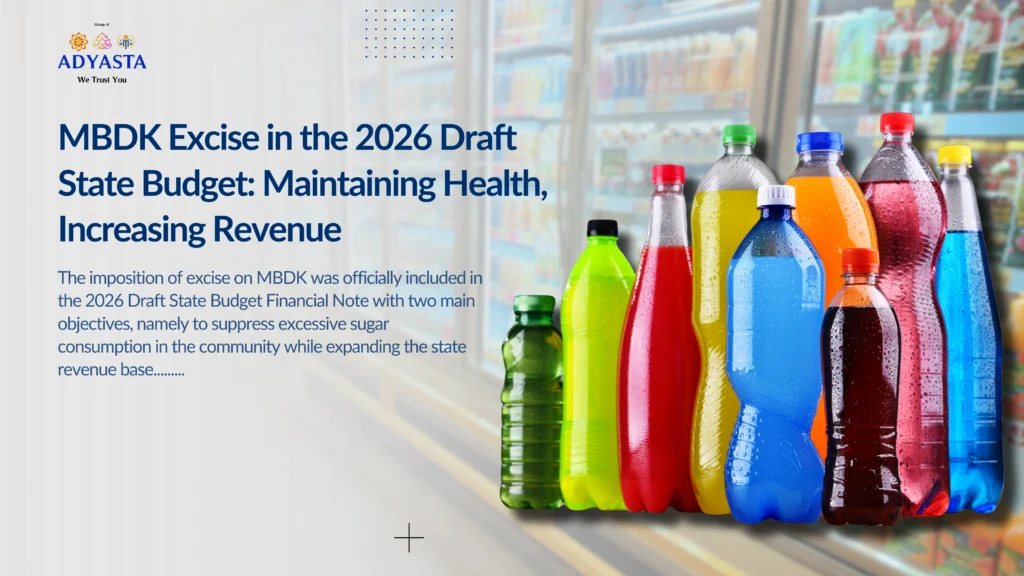
September 9, 2025The imposition of excise tax on MBDK has been officially included in the 2026 Draft State Budget Financial Note with two main objectives, namely to reduce excessive sugar consumption in the community and to expand the state’s revenue base. The government is targeting total revenue from customs and excise to reach IDR 334.3 trillion, with MBDK expected to be one of the major contributors.
Although the policy will be implemented starting in 2026, the MBDK tariff rate has not yet been finalized. The government has emphasized that this process will involve the House of Representatives and the Ministry of Health to ensure that the policy strikes a balance between fiscal and health considerations.
The imposition of excise tax on packaged sweetened beverages (MBDK) is expected to have a significant impact on state revenue and industry. After the target of Rp3.8 trillion in the 2025 State Budget failed to materialize, this policy has been reintroduced in the 2026 Draft State Budget with the hope of a greater contribution. In addition to strengthening the strategy of diversifying the customs and excise revenue base, this policy is also expected to balance fiscal objectives with controlling public consumption.
For the beverage industry, the implementation of MBDK excise tax risks suppressing performance, especially for medium and small producers. Although demand for sweetened beverages is relatively inelastic, price increases have the potential to encourage consumers to switch to traditional or unpackaged beverages. This shift could suppress sales in the formal industry while triggering unfair competition with informal businesses that are not subject to excise tax.
Meanwhile, from a macroeconomic perspective, the government is optimistic that the impact on inflation and people’s purchasing power will be relatively limited. However, this policy must be balanced with social protection programs and fiscal reforms that target low-income groups. This is important to reduce potential social resistance due to price increases while ensuring that the main objective of controlling excessive sugar consumption is achieved.
The imposition of excise tax on MBDK in the 2026 Draft State Budget is a strategic step by the government that is not only aimed at strengthening state revenue through excise base diversification, but also at encouraging the control of excessive sugar consumption for the sake of public health. However, the effectiveness of this policy will greatly depend on the setting of proportional tariffs, industry readiness, and the mitigation of possible social and economic impacts.
Related posts
October 16, 2026
October 14, 2026
October 13, 2026