





Tax Base Expansion: Shadow Economy Enters Radar in 2026

Tax Restitution Expanded: PER-16/PJ/2025 Officially in Effect
August 26, 2025
Maintaining Local Tax Fairness Amidst Property Tax Controversy
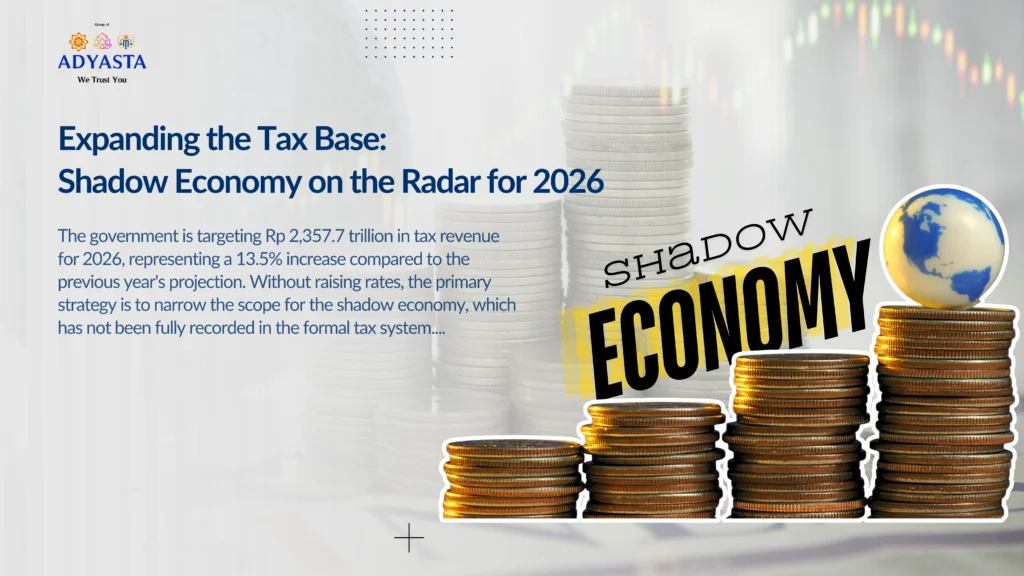
September 8, 2025The government is targeting tax revenue of Rp2,357.7 trillion in 2026, representing a 13.5% increase compared to the previous year’s projection. Without raising tax rates, the main strategy chosen is to narrow the scope of the shadow economy, which has not been fully recorded in the formal taxation system.
Finance Minister Sri Mulyani emphasized that the informal sector, particularly retail traders, will be one of the key areas of focus for oversight. These efforts are reinforced by strengthening the Coretax system, integrating data across institutions, and implementing the Compliance Improvement Program (CIP) to encourage compliance without adding burdens on SMEs.
In addition, the government is also preparing new regulations for e-commerce platforms to deduct and deposit 0.5% of sales revenue to the tax authorities. This policy is expected to narrow the scope for tax avoidance in the digital realm and at the same time help map the transactions of small and medium-sized sellers.
The potential additional revenue from the shadow economy is estimated to reach Rp500 trillion. The four sectors under the spotlight are retail trade, food and beverage businesses, gold trade, and fisheries. Surveillance strategies will be strengthened through intelligence analysis, mapping, and the use of digital data.
On the other hand, Chairman of the House of Representatives Budget Committee Said Abdullah emphasized that oversight of the shadow economy will not burden MSMEs. As such, MSMEs will continue to be subject to a final tax rate of 0.5% without any changes to the regulations. This certainty signals that the government’s strategy prioritizes expanding the tax base and ensuring system fairness, rather than increasing the burden on small businesses.
Related posts
October 16, 2026
October 14, 2026
October 13, 2026