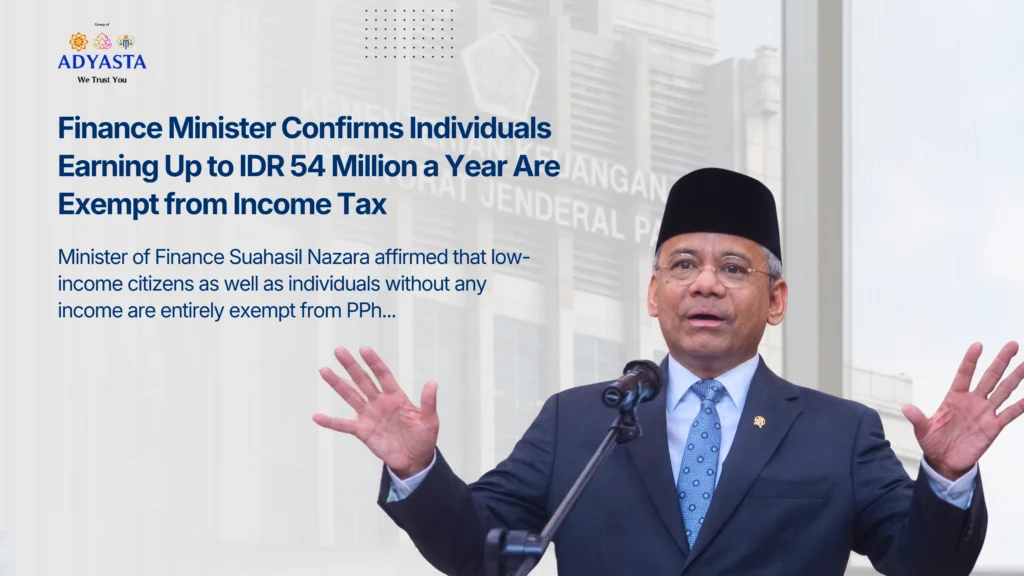


Finance Minister Confirms Individuals Earning Up to IDR 54 Million a Year Are Exempt from Income Tax
November 17, 2026
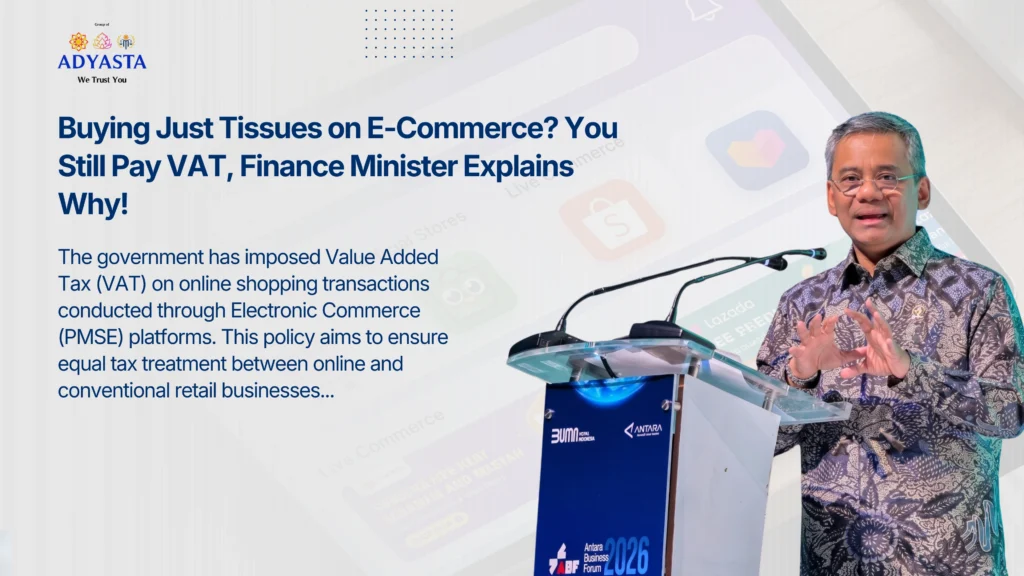
The government has imposed Value Added Tax (VAT) on online shopping transactions conducted through Electronic Commerce (PMSE) platforms. This policy aims to ensure equal tax treatment between online and conventional retail businesses.
Finance Minister Suahasil Nazara explained that the policy is necessary to prevent differences in tax treatment between the two types of businesses. To illustrate this, he gave a simple example involving the purchase of tissues.
According to Suahasil, when consumers buy tissues at a physical store, the transaction is subject to 11% VAT. However, before this policy took effect, purchasing the same product through an online store was not subject to VAT. This situation was considered to create an uneven competitive environment between conventional and digital businesses.
“If you buy these tissues at a conventional store, you pay VAT. But if you buy the same tissues online, there is no VAT. This creates an uneven playing field,” Suahasil said during a press conference on Friday (November 13, 2026).
Through this policy, the government aims to ensure that digital and conventional businesses receive equal tax treatment.
Director General of Taxes Bimo Wijayanti also explained that the provisions concerning the collection of Article 22 Income Tax (PPh Article 22) on Electronic Commerce (PMSE) are regulated under Minister of Finance Regulation (PMK) Number 37 of 2026, which officially took effect on October 1, 2026.
As part of its implementation, the Directorate General of Taxes (DJP) has appointed four e-commerce platforms to collect the tax: Tokopedia, Shopee, Blibli, and Lazada.
The implementation of this program will begin to be reported in November 2026. According to the announced schedule, payments are due on November 15, followed by reporting on November 20.
Through this policy, the government hopes to create fairer competition between digital and conventional businesses. As a result, transactions made through e-commerce platforms and physical stores are expected to receive equal tax treatment.