

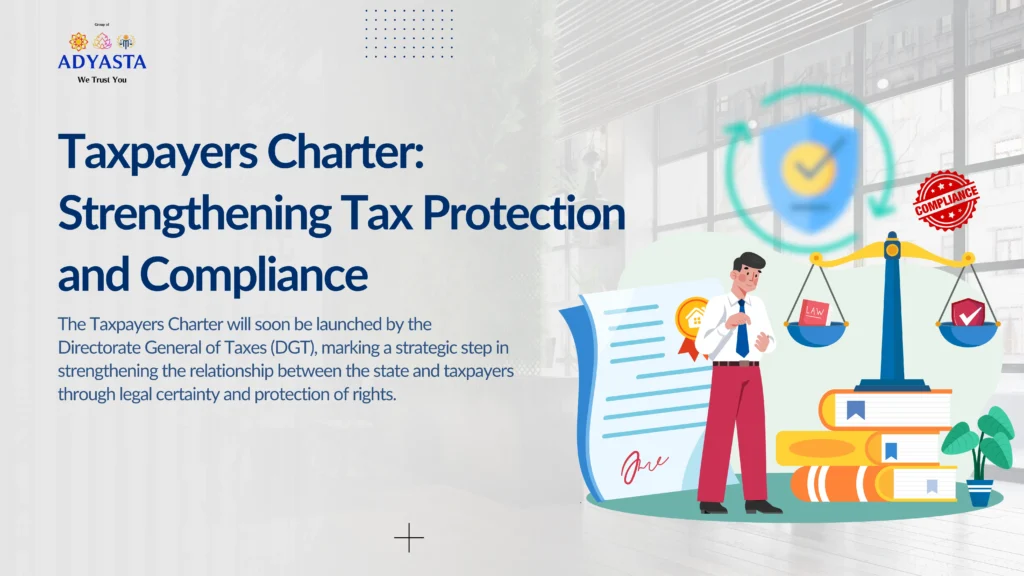


Taxpayers Charter: Strengthening Taxpayer Protection and Compliance

Tax Service Transformation: 13 Mandatory Coretax Administrative Services in PER-8/PJ/2025
July 23, 2025
Marketplace as Tax Withholder: Efficiency or Added Burden?
July 31, 2025The Taxpayers Charter is an upcoming initiative by the Directorate General of Taxes (DJP) that represents a strategic step to strengthen the relationship between the state and taxpayers through legal certainty and protection of taxpayer rights. This Charter serves as an official guideline that consolidates hundreds of legal provisions related to taxpayer rights and obligations into a single, accessible, and easy-to-understand document. It simplifies and codifies various regulations previously scattered across numerous laws and ministerial regulations.
Why Is the Taxpayers Charter Important?
- It enhances transparency and accountability between taxpayers and the DJP, helping to build mutual trust.
- It symbolizes the transformation of the DJP from a tax-collecting authority to a public service partner in nation-building.
- It provides clear and concrete guidance on taxpayer rights and obligations, reducing differing interpretations of existing regulations.
Contents of the Taxpayers Charter
8 Fundamental Taxpayer Rights:
- The right to access information and education on taxation.
- The right to receive tax services in accordance with prevailing laws, free of charge.
- The right to be treated fairly, equally, with respect and dignity in the exercise of tax rights and obligations.
- The right to pay no more than the amount of tax owed.
- The right to file legal appeals on tax disputes and to choose administrative resolution mechanisms to prevent future disputes.
- The right to confidentiality and security of taxpayer data.
- The right to be represented by a proxy in the fulfillment of tax rights and obligations as regulated.
- The right to lodge complaints and report tax violations in accordance with applicable tax laws.
8 Core Taxpayer Obligations:
- To submit accurate, complete, and clear tax returns (SPT) as required by law.
- To act with honesty and transparency in fulfilling tax obligations.
- To uphold ethics, respect, courtesy, and integrity in the exercise of tax rights and obligations.
- To be cooperative in providing data, information, and supporting documents for services, audits, supervision, and law enforcement.
- To use tax facilities and incentives responsibly and in compliance with tax laws.
- To keep proper accounting records or bookkeeping in accordance with tax regulations.
- To appoint a representative or proxy when required, in line with the law.
- To refrain from offering gratuities or bribes in any form to DJP officials.
The launch of the Taxpayers Charter marks a new era that upholds justice and transparency in Indonesia’s tax governance. It serves as both a protective tool and an empowerment framework for taxpayers, reshaping the government–citizen relationship into one built on mutual respect and shared responsibility for national progress.
Related posts
October 16, 2026
October 14, 2026
October 13, 2026